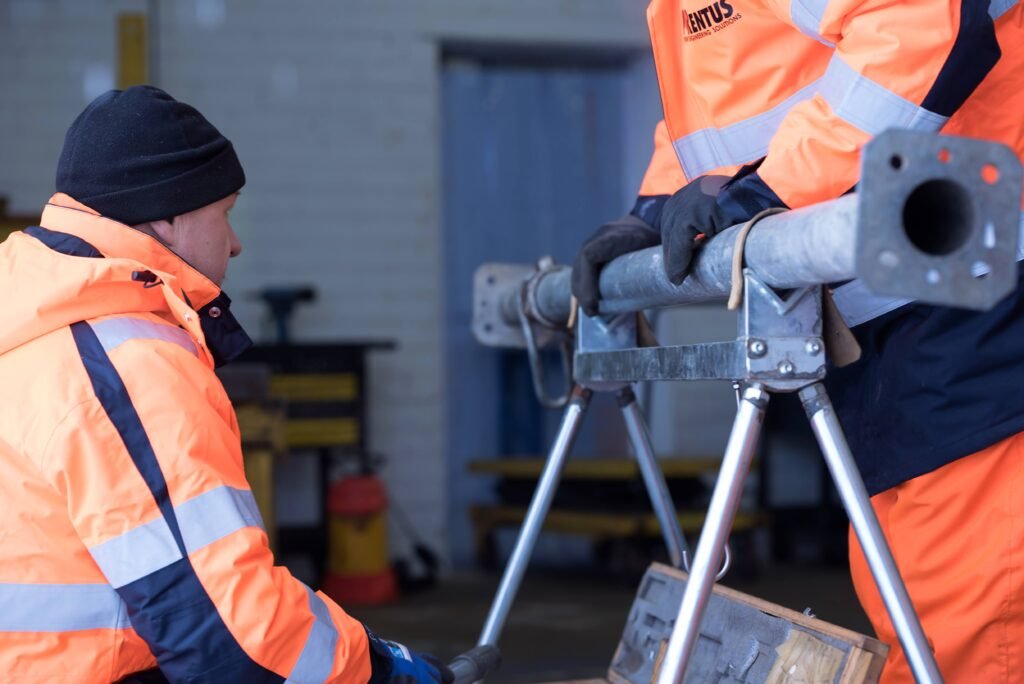
Formwork props are designed to be used repeatedly. But repeated transport, handling, loading, unloading and use on construction sites inevitably causes damage.
A prop may come back to the yard with a dent in the outer tube. The inner tube may become stuck and stop sliding. The entire prop may bend along its length. In many companies, this creates the same question: should the damaged prop be repaired or replaced?
In many cases, the prop itself is not necessarily at the end of its service life. The problem may simply be that its geometry has changed enough to prevent normal operation. That is where a proper formwork prop refurbishment process becomes important.
Instead of treating every damaged prop as scrap, contractors, rental companies and formwork operators can first determine:
- what kind of damage has occurred;
- whether the prop is suitable for repair;
- which repair method is appropriate;
- how quickly the prop can be returned to the fleet after repair and inspection;
- whether refurbishment makes more economic sense than replacement.
This guide explains the most common types of formwork prop damage and how specialized mechanical repair tools such as PropFIX can be used as part of an in-house refurbishment process.
Why formwork props become unusable before they are worn out
A steel formwork or shoring prop can have a long potential service life. In practice, props often become difficult or impossible to use because of relatively localized mechanical damage.
Common causes include:
- drops during loading or unloading;
- impact from other equipment;
- rough handling on construction sites;
- transport damage;
- props being thrown into containers or storage racks;
- repeated use across multiple projects.
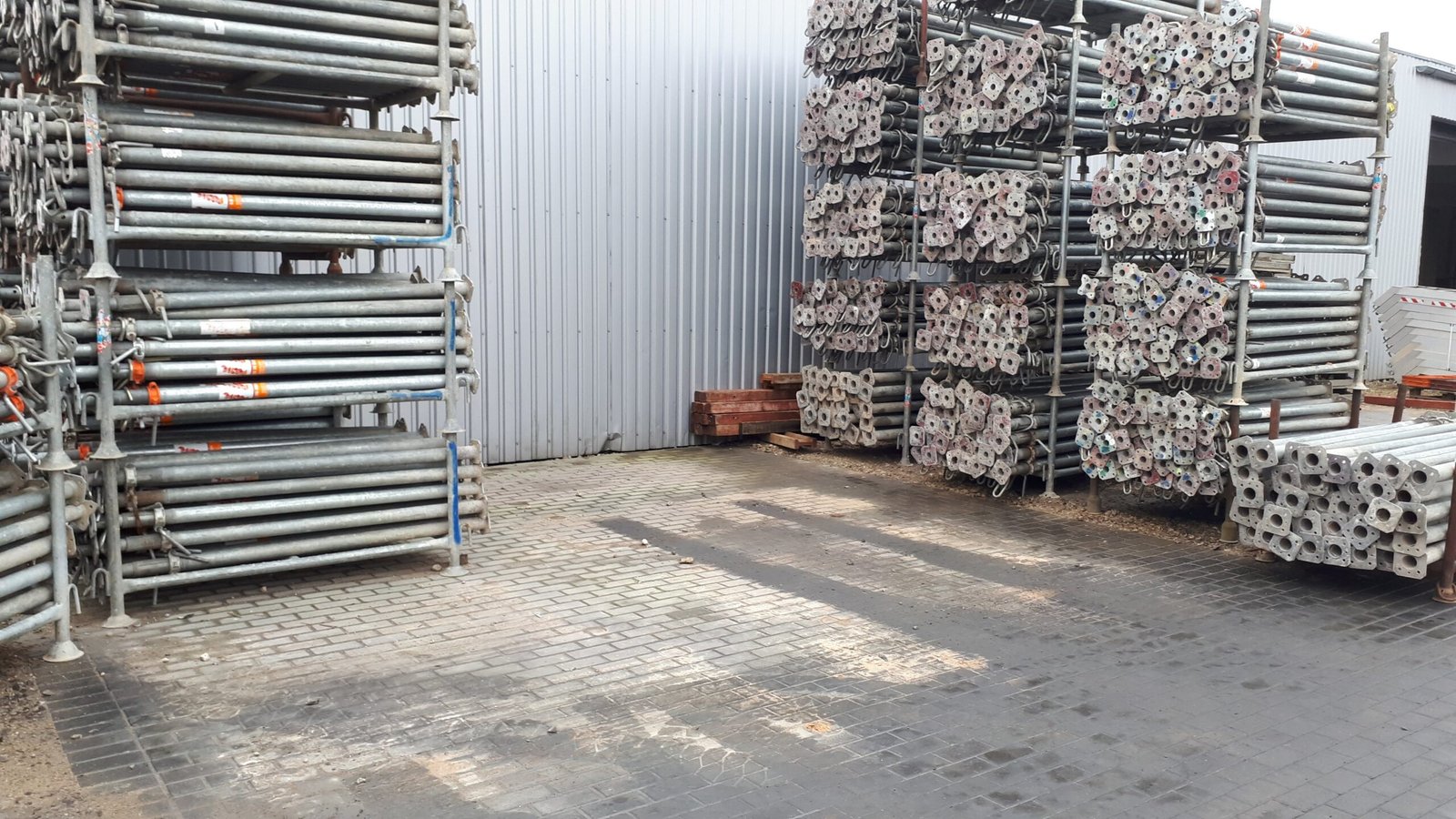
The most common result is not necessarily a broken prop. More often, the tube becomes locally dented or deformed. The inner tube may then become stuck inside the outer tube and stop moving freely.
For a rental company or contractor, this creates an operational problem: the asset may still be physically present in the fleet, but it can no longer be rented or used as intended. Sometimes the problem is not that the prop has reached the end of its life. The problem is that its geometry has been damaged.
The three most common formwork prop problems
Not all damaged props should be treated in the same way. The first step is to identify what kind of damage you are dealing with.
1. Dented prop tubes
A local dent in the outer or inner tube is one of the most common problems in formwork rental yards. The tube may remain otherwise intact, but the dent changes its round geometry.
As a result:
- the inner tube may stop sliding;
- adjustment may become difficult;
- the tubes may become completely stuck;
- the prop becomes unusable in normal operation.
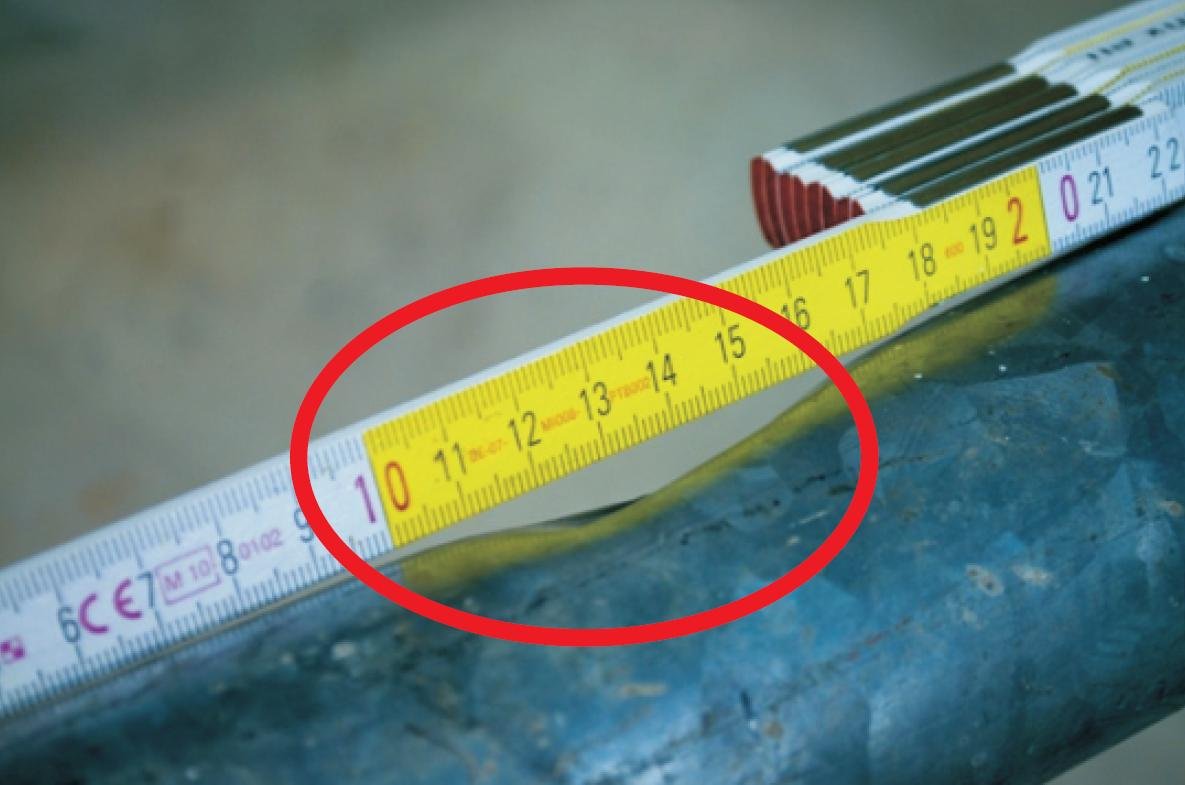
This type of damage requires a localized tube repair. The goal is to restore the geometry of the tube at the damaged point rather than replacing the whole prop.
The PropFIX Tool Kit is designed specifically for this type of repair. The mechanical tool is inserted through the opening in the prop footplate and positioned inside the tube at the damaged location. Mechanical expansion is then used to raise the dent from inside the tube.
The standard PropFIX Tool Kit is designed for props with a minimum entrance opening of approximately 40 mm and handles outer tube diameters up to approximately Ø76 mm in its standard configuration. For larger props, additional layers extend the working range: the 80 mm extra-size layer covers wider tubes, while the 84 mm extra-size layer supports inner tubes up to Ø84 mm and outer tubes up to Ø88 mm. Custom-made extra-size layers can be produced for diameters up to approximately Ø110 mm.
The standard configuration reaches damage approximately 1.85 m from the footplate. By adding one or more Additional Extension Parts, props of any length can be repaired, provided the correct configuration and safe working setup are used.
2. Stuck inner and outer tubes
Sometimes the most obvious problem is not the dent itself. The inner tube is simply stuck inside the outer tube and cannot be removed.
A common improvised method is to hit the prop or footplate with a hammer or sledgehammer until the tubes separate. The problem is that the force is applied to components that were not designed to be repeatedly hammered. This may deform the footplate or damage the surrounding area.
A dedicated extractor is a more controlled approach. The PropFIX Extractor is designed to separate stuck inner and outer prop tubes before the dent repair process begins.
Once the tubes are separated, the damaged area can be inspected and, if suitable, repaired. This creates a clear refurbishment sequence: separate → inspect → repair → inspect again → return suitable equipment to the fleet.
3. Bent or “banana” props
A local dent and a completely bent prop are two different problems. If the entire prop has curved along its length, repairing one local section will not solve the problem. This type of deformation requires a straightening process.
The PropFIX Banana Unbender was developed for props that are bent along their length rather than only locally dented. A dent repair tool should not be described as a solution for every type of prop damage. The correct repair method depends on the actual geometry of the damaged prop. See the complete PropFIX product range.
Can damaged formwork props be repaired?
Often, yes. But the better question is: what exactly is damaged?
A prop with a localized dent is different from a prop with:
- cracked steel;
- damaged welds;
- heavily corroded tubes;
- damaged threads;
- severe structural deformation;
- missing components.
PropFIX is intended to restore tube geometry in cases where the relevant problem is a dent, deformation, stuck tube or whole-length bend that can be mechanically corrected. It is not a structural certification system.
After repair, the prop should still be assessed according to the manufacturer’s requirements, the company’s own inspection procedures and applicable workplace safety requirements before it is returned to service. Repairing geometry and confirming structural suitability are not the same task.
How does PropFIX repair a dented formwork prop?
The principle is simple. The tool is inserted into the prop tube from the bottom through the footplate opening. It is then moved to the damaged section. From inside the tube, mechanical force is applied outward against the dent.
The aim is to restore the tube’s shape in a controlled way from the inside rather than hammering the outside surface.
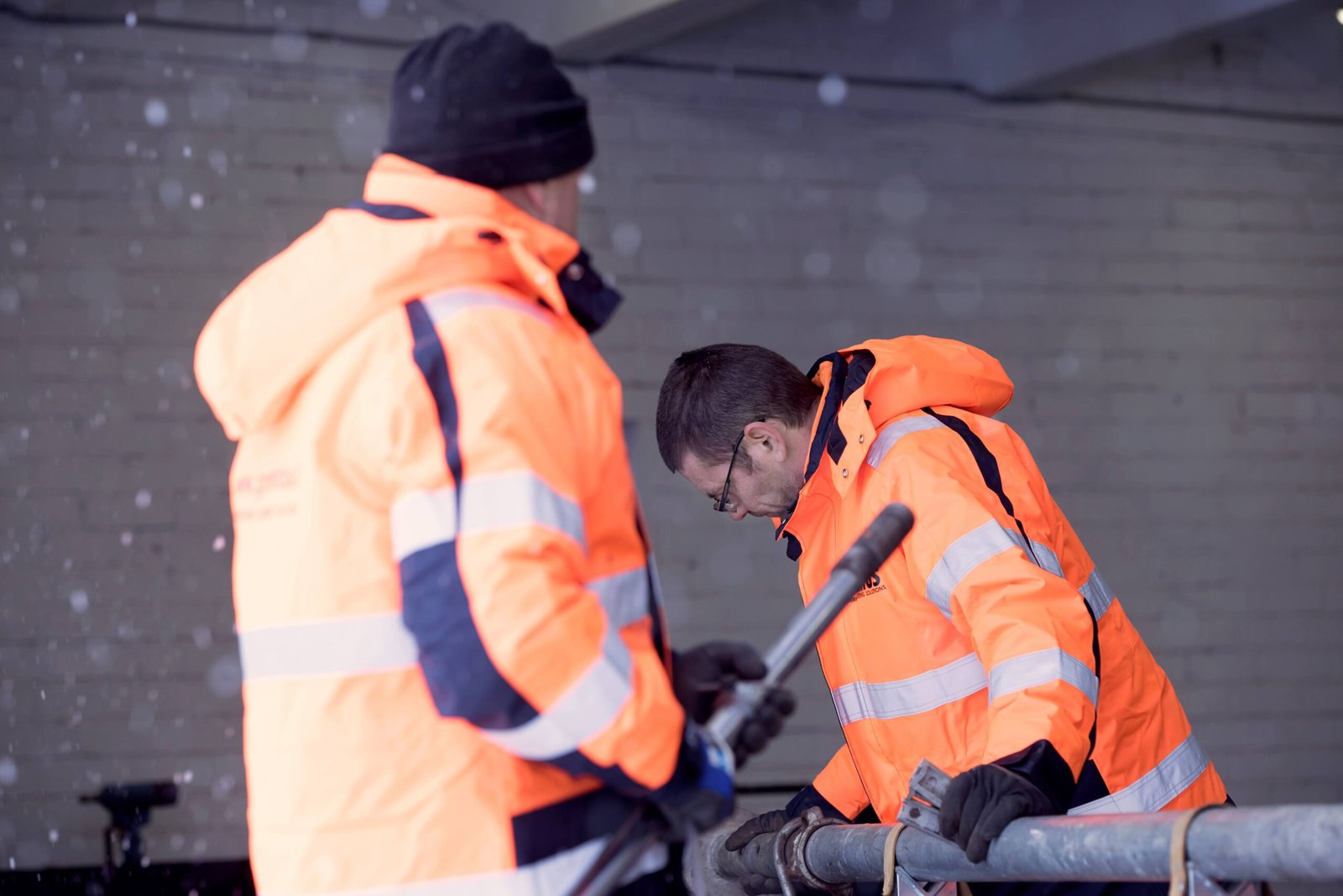
The standard PropFIX system is mechanical and manual. It does not require:
- electricity;
- gas;
- a hydraulic power pack.
The system is portable and can therefore be used in a yard, workshop or other suitable maintenance area without installing additional powered infrastructure.
Why repair from the inside?
A formwork prop is essentially a telescopic system. Its inner and outer tubes need to move relative to one another. Even a comparatively small dent can interfere with that movement.
Repairing from inside the tube allows force to be applied directly to the deformed area. This is different from external hammering, where the operator may be trying to correct the shape indirectly. It also allows the repair to focus on restoring geometry while avoiding unnecessary external impact on the tube surface.
For rental companies in particular, the objective is not simply to make one damaged prop usable again. The objective is to create a repeatable refurbishment process.
How long does formwork prop repair take?
There is no honest universal answer because the repair time depends on the prop and on how the yard is organized.
A typical repair process with PropFIX may take approximately 2–7 minutes, but this should be understood as a working range rather than a guaranteed cycle time.
The actual time depends on factors such as:
- the severity of the dent;
- prop diameter;
- whether an additional layer is required;
- whether an extension is required;
- whether the inner tube first needs to be extracted;
- how props are sorted before repair;
- how many different prop types are being processed in the same batch.
If a yard has a large quantity of identical props already sorted by diameter and damage type, the process can be very fast because the same tool configuration can be used repeatedly. If every prop is different, preparation and tool adjustment naturally take longer. This is why yard organization matters almost as much as the repair tool itself.
How many formwork props can be repaired per day?
Daily productivity varies significantly. A company processing one standardized prop type in batches can repair considerably more units than a yard working with mixed diameters, different damage types and unsorted inventory.
Factors affecting throughput include:
- whether the props are pre-sorted;
- whether the same diameter is processed continuously;
- whether tubes are already separated;
- how severe the damage is;
- whether accessories need to be changed between repairs;
- how the workstation and material flow are organized.
For high-volume rental yards, the best results generally come from treating prop repair as a process, not as an occasional maintenance task:
- damaged props are collected separately;
- props are sorted by type and diameter;
- stuck tubes are separated;
- dents are repaired in batches;
- bent props are processed separately;
- repaired equipment is inspected before being returned to inventory.
This reduces unnecessary setup time and makes the repair station more productive.
Can PropFIX repair different prop diameters?
Yes, within the configuration limits of the selected tool.
The standard PropFIX Tool Kit is designed for a minimum entrance hole of approximately 40 mm and supports outer tube diameters up to approximately Ø76 mm in the standard setup.
- 80 mm extra-size layer for wider prop tubes;
- 84 mm extra-size layer for inner tubes up to Ø84 mm and outer tubes up to Ø88 mm;
- custom-made extra-size layers for special configurations and diameters up to approximately Ø110 mm.
Props are not limited by their total length. The standard tool reaches approximately 1.85 m from the footplate, and one or more Additional Extension Parts can be used to reach damage further inside props of any length.
There is also a smaller PropFIX ECO configuration for props with a smaller entrance opening. The current product specification gives a 35 mm entrance opening and up to approximately Ø60 mm outer tube diameter; it can also be configured for square tubes.
Before selecting a tool configuration, three measurements are especially important:
- footplate entrance hole diameter;
- tube diameter;
- distance from the footplate to the furthest damaged area.
These measurements determine whether the standard configuration is sufficient or whether additional layers or extensions are needed.
Can square formwork props be repaired?
Some PropFIX configurations can also be adapted for square tubes. This should be assessed separately because square and round tubes require different contact geometry.
PropFIX ECO can be used with square-shaped tubes when the appropriate additional layers are used. If you work with non-standard profiles, the safest approach is to send the prop dimensions and photographs before ordering.
Do you need hydraulics to repair formwork props?
No. PropFIX is a mechanical system.
This matters because some companies assume that a prop straightening or repair process necessarily requires hydraulic cylinders, pumps, electrical power or a fixed workshop installation.
A manual mechanical system offers a different operating model. It can be moved between work areas, does not depend on an external power supply and can be used as a dedicated prop refurbishment station. This can be particularly useful for rental yards that want to maintain repair capability in-house without investing in a larger hydraulic setup.
Repairing props versus replacing them
The financial logic is simple. If a prop is genuinely beyond repair, it should be replaced. But if the main reason it cannot be used is a repairable geometric deformation, immediate replacement may be an unnecessary cost.
The relevant calculation is not simply “What does a repair tool cost?” It is: how much replacement cost can we avoid over the working life of the repair system?
Based on long-term feedback from returning PropFIX customers, the internal wear component typically requires replacement only after roughly 20,000 prop repairs on average. This is not a guaranteed lifetime for every operating environment, but it provides useful context for the economics of repeated refurbishment.
Using the current €4,350 price of the standard PropFIX Tool Kit as a simple example:
€4,350 ÷ 20,000 repairs = approximately €0.22 of tool acquisition cost per repaired prop, excluding labor, accessories and other operating costs.
The real saving depends on the replacement value of the prop, labor cost, the number of damaged props, how frequently equipment is returned damaged and the percentage of props that are suitable for refurbishment.
That is why payback should be calculated for each company rather than promised as a universal number. Calculate your own PropFIX payback.
Why formwork rental companies have a different repair problem
For a construction company, a damaged prop is a maintenance cost. For a formwork rental company, it is also an asset utilization problem.
A damaged prop sitting in the yard:
- occupies inventory;
- cannot be rented;
- does not generate revenue;
- may eventually be replaced even though the original investment has not yet delivered its full useful life.
A few damaged props are a maintenance issue. Hundreds or thousands of damaged props across multiple rental cycles become an asset management issue. That is why high-volume rental companies benefit from having an organized refurbishment process rather than dealing with damaged props individually.
What information is needed before choosing a prop repair system?
Before selecting the right PropFIX configuration, collect a few basic measurements.
- Footplate entrance hole diameter. The tool must physically enter the prop.
- Outer and inner tube diameters. These determine which tool and layers are required.
- Maximum distance to the damaged area. This determines whether the standard extension is sufficient.
- Typical damage type. Is the main problem a dent, a stuck tube or a whole-length bend?
- Approximate quantity of damaged props. This helps determine whether an occasional repair setup or a dedicated refurbishment workstation makes more sense.
Photographs of typical damaged props are also useful. In many cases, these measurements are enough to recommend the correct configuration.
What tools are used in a complete prop refurbishment setup?
PropFIX Tool Kit
Used for local dents and tube deformation. View PropFIX Tool Kit.
PropFIX Extractor
Used to separate stuck inner and outer tubes before repair. View PropFIX Extractor.
Working Bench
Provides a dedicated workstation for the prop repair process. View the PropFIX Working Bench.
Banana Unbender
Used for props that are bent along their full length rather than locally dented. View the PropFIX Banana Unbender.
Additional layers and extensions
Use the 80 mm layer, the 84/88 mm configuration or a custom layer for diameters up to approximately Ø110 mm. Additional Extension Parts provide the reach required for props of any length.
This modular approach is important because most professional yards do not operate with only one prop size.

Is formwork prop refurbishment environmentally better than replacement?
Generally, extending the useful life of repairable equipment reduces the need to replace it prematurely. Steel props require material, manufacturing, transport and logistics.
If a prop can continue to perform its intended function after suitable repair and inspection, extending its service life can reduce unnecessary material turnover. However, sustainability should not be used as a reason to keep equipment in service when it no longer meets the required condition. The priority remains correct technical assessment.
When should a prop not be repaired?
Not every damaged prop belongs in a repair process. A prop should be assessed separately if it has:
- cracks;
- serious weld damage;
- severe corrosion;
- heavily damaged threads;
- missing or damaged structural components;
- deformation beyond the scope of the repair system;
- any condition that makes its structural suitability uncertain.
A dent repair tool should never be treated as a substitute for inspection. The purpose of PropFIX is to repair specific geometric problems, not to certify a prop.
Formwork prop repair is a process, not just a tool
This is the most important point. Buying a tool alone does not create an efficient refurbishment operation. The best results come when repair is treated as part of fleet management.
Identify damage → sort props → separate stuck tubes → repair geometry → straighten bent props where appropriate → inspect → return suitable props to inventory.
Once this becomes a repeatable process, damaged props stop being treated automatically as scrap. They become assets that can first be evaluated for recovery.
For companies with significant formwork and shoring fleets, that difference can have a direct impact on replacement expenditure and equipment utilization.
Frequently asked questions about formwork prop repair
Can a dented formwork prop be repaired?
Yes, many local tube dents can be mechanically repaired if the damage is suitable for refurbishment. The damaged area should still be inspected before and after repair.
How do you fix a dent in a formwork prop?
A specialized internal repair tool can be inserted into the tube and positioned behind the dent. Mechanical expansion is then used to restore the local tube geometry.
How do you separate stuck prop tubes?
A dedicated extractor can be used to pull the inner tube out of the outer tube before repairing the deformation that caused it to become stuck.
Can a bent prop be straightened?
Some whole-length bends can be corrected using a dedicated straightening system such as the PropFIX Banana Unbender. A whole bent prop requires a different process from repairing a local dent.
How long does prop repair take?
A typical PropFIX repair may take around 2–7 minutes, depending on the damage, dimensions, tool configuration and preparation required.
Does PropFIX require electricity?
No. PropFIX is mechanically operated and does not require electricity, gas or a hydraulic power unit.
What diameter props can PropFIX repair?
The standard PropFIX Tool Kit supports outer tube diameters up to approximately Ø76 mm. The 84 mm extra-size layer supports inner tubes up to Ø84 mm and outer tubes up to Ø88 mm. Custom-made layers can extend the working range to approximately Ø110 mm. PropFIX ECO is designed for smaller entrance openings and tubes up to approximately Ø60 mm.
How far inside the prop can the tool reach?
The standard PropFIX configuration reaches approximately 1.85 m from the footplate. One or more Additional Extension Parts can be added, allowing damage to be reached in props of any length.
Is a repaired prop automatically safe to use?
Yes — provided that the prop is suitable for repair and the repair is performed correctly. The PropFIX repair process restores the tube without compromising the prop’s load-bearing capacity or safety. As with any repaired load-bearing equipment, the prop should be inspected after repair and returned to service only if it meets the manufacturer’s and applicable safety requirements.
Is repairing props cheaper than replacing them?
Yes. When a prop is suitable for repair, repairing it with PropFIX is significantly more economical than replacing it. One tool can repair thousands of props, making the tool cost per repair very low compared with purchasing a new prop. The exact savings depend on your fleet and repair volume. Calculate your individual PropFIX payback.
Do you have damaged props in your yard?
If your formwork or shoring props are being removed from service because of dents, stuck tubes or bends, the first step is to determine whether they are suitable for refurbishment.
Send us:
- photos of the damaged props;
- footplate entrance hole diameter;
- inner and outer tube diameters;
- distance to the furthest damaged area;
- approximate number of props you expect to repair.
We can recommend the appropriate PropFIX configuration for your fleet.