Formwork prop repair and refurbishment in a professional rental yard

How to separate stuck formwork prop tubes without damaging the footplate

A formwork prop may look complete and undamaged from a distance but still be impossible to use because its inner tube no longer moves. The telescopic sections may be difficult to adjust or completely stuck together.

For a contractor or rental company, the immediate temptation is often to use a hammer or sledgehammer until the tubes separate. That may occasionally move the tube, but it also applies uncontrolled impact to the footplate and surrounding components. The attempted solution can create additional deformation before the original cause has even been identified.

A better process is to determine why the tubes are stuck, separate them in a controlled way and then inspect the deformation that caused the problem.

This guide explains how to separate stuck formwork prop tubes, why the problem occurs and how a dedicated extractor fits into a complete prop refurbishment process.

Why do formwork prop tubes become stuck?

Formwork and shoring props are telescopic. The inner and outer tubes must remain sufficiently round and correctly aligned to move relative to each other.

Repeated site use can change that geometry. Common causes include:

  • a local dent in the outer tube;
  • deformation of the inner tube;
  • a prop being dropped during loading or unloading;
  • impact from machinery or other equipment;
  • props being thrown into a container or rack;
  • a whole-length bend that misaligns the tubes;
  • heavy contamination or corrosion;
  • damage around the footplate or adjustment components.

A comparatively small dent can be enough to restrict the clearance between the tubes. The inner tube may still move through part of its range and then stop when it reaches the damaged area. In more severe cases, the tubes cannot be separated at all.

The fact that the tubes are stuck does not, by itself, explain whether the prop is suitable for refurbishment. It only identifies the first operational problem: the sections must be separated before the damaged surfaces can be inspected properly.

Why hammering the footplate is a poor repair method

When a tube refuses to move, striking the footplate can seem like the fastest option. The problem is that the force is not applied directly to the deformation inside the tube.

Repeated hammering can:

  • bend or distort the footplate;
  • damage welds or the area around them;
  • create new dents;
  • make later inspection more difficult;
  • expose the operator to uncontrolled movement and rebound;
  • turn one repairable problem into several different problems.

More force does not necessarily correct the geometry that trapped the tube. It may simply transfer the damage to another component.

A controlled pulling method allows the operator to focus on separating the tubes first. Once they are apart, the actual obstruction can be located and assessed.

A controlled tube-separation process

The exact company procedure should follow the prop manufacturer’s requirements and applicable workplace safety rules. As a general workflow, tube separation can be organized into the following stages.

1. Remove the prop from operational stock

A prop with restricted or stuck movement should not remain mixed with equipment ready for dispatch. Mark it clearly and move it to the inspection or refurbishment area.

Record the prop type and the problem reported by the site or yard team. If the tube still moves partially, note where the movement stops.

2. Carry out an initial visual inspection

Before applying a repair tool, check for conditions that require a separate technical assessment:

  • cracks;
  • serious corrosion;
  • damaged welds;
  • heavily damaged threads;
  • missing components;
  • severe or uncertain structural deformation.

Do not treat a tube-separation tool as a reason to continue with a prop that is clearly outside the permitted refurbishment process.

3. Identify visible deformation

Inspect the length of the outer tube for dents, flattened areas and bending. Check the footplate and adjustment mechanism as well.

The visible damage may indicate where the inner tube is trapped, but the complete condition can often be assessed only after the tubes have been separated.

4. Secure the prop in a stable working position

The prop should be supported so it cannot roll, fall or move unpredictably during extraction. The work area must provide enough clearance for the tube to move when the pulling force is applied.

A dedicated refurbishment workstation makes this easier because the prop, tool and operator have defined positions.

5. Attach the extractor correctly

The PropFIX Extractor is designed to pull the inner and outer prop tubes apart in a controlled way before dent repair begins.

Use the extractor only in the configuration intended for the prop and follow the operating instructions supplied with the equipment. Confirm that all contact and pulling points are correctly engaged before applying force.

6. Apply force progressively

The purpose is controlled separation, not sudden impact. Increase the pulling force gradually and observe the prop throughout the process.

Stop if:

  • the setup moves out of alignment;
  • the prop or tool shifts unexpectedly;
  • previously unseen damage becomes visible;
  • the force required appears inconsistent with the normal process;
  • the condition of the prop becomes uncertain.

7. Separate, inspect and classify

Once the tubes are apart, inspect both components and identify the cause of the obstruction.

The next step depends on the damage:

  • a local dent may be suitable for internal geometry repair;
  • a whole-length bend requires a straightening process;
  • corrosion, cracks, weld damage or other structural concerns require rejection or further technical assessment.

The correct sequence is therefore:

Separate → inspect → classify → repair if suitable → inspect again.

See the tube extractor in action

These short videos show the PropFIX tube extractor and a controlled method for pulling out a stuck inner tube without hammering the footplate.

PropFIX tube extractor

How to pull the stuck inner tube without hammering

What happens after the tubes are separated?

Separating the tubes is not the complete repair. It provides access to the damage and makes an accurate assessment possible.

Repairing a local dent

If a suitable local dent has changed the round geometry of the tube, a repair tool can be positioned behind the damaged area and expanded mechanically from inside.

The PropFIX Tool Kit is designed for this controlled internal repair process. The appropriate tool setup depends on the footplate opening, tube diameter and distance to the damage.

Straightening a bent prop

If the entire prop is curved along its length, a local dent repair will not correct the full deformation. The prop should be assessed for a dedicated straightening process such as the PropFIX Banana Unbender.

Rejecting unsuitable damage

If inspection reveals cracks, serious corrosion, damaged welds or another condition outside the permitted repair scope, the prop should not proceed as a routine refurbishment item.

Geometry restoration does not replace the company’s technical inspection and acceptance criteria.

How to organize stuck-tube repairs in a rental yard

For a rental company, individual repairs become much more efficient when similar props are processed in batches.

Sort the repair queue by:

  • prop type;
  • tube diameter;
  • footplate entrance opening;
  • damage location;
  • whether the tubes are already separated;
  • whether the problem is a local dent or a whole-length bend.

This reduces repeated tool changes and makes material flow easier to control.

A practical refurbishment station can use separate areas for:

  1. incoming damaged props;
  2. initial inspection;
  3. stuck-tube extraction;
  4. dent repair;
  5. whole-length straightening;
  6. post-repair inspection;
  7. accepted and rejected equipment.

The PropFIX Working Bench can form the basis of a dedicated repair workstation.

Measurements needed before selecting equipment

Before recommending a PropFIX configuration, several measurements are especially important:

  • the footplate entrance-hole diameter;
  • inner and outer tube diameters;
  • the distance from the footplate to the damaged area;
  • the type and location of the visible damage;
  • the approximate number of props to be processed.

Photographs of the prop, footplate, damaged section and typical yard stock are also useful.

These details help determine whether the standard tool is appropriate and whether additional layers, extensions or a different solution are required.

How long does tube separation and repair take?

There is no universal cycle time. Separating the tubes is only one stage, and the total time depends on:

  • how tightly the tubes are trapped;
  • the type and severity of deformation;
  • whether the props have already been sorted;
  • tool setup and working-area organization;
  • whether a dent or whole-length bend must be repaired afterward;
  • the inspection procedure.

A typical PropFIX dent repair may take approximately 2–7 minutes, but this range should not be treated as a guarantee for a complete extraction, repair and inspection cycle.

Batching similar props generally reduces preparation time.

Does separating the tubes make the prop safe to use?

No. Separation restores access and movement; it does not certify the prop.

After the tubes have been separated and the suitable deformation repaired, the prop should be inspected. It should return to service only when it meets the manufacturer’s requirements, the company’s inspection procedure and applicable safety requirements.

The PropFIX repair process restores tube geometry without compromising load-bearing capacity or safety when the prop is suitable for repair and the work is performed correctly. The post-repair decision still belongs to the responsible inspection process.

Frequently asked questions

Why is the inner tube stuck inside the outer tube?

A dent, flattening, misalignment or whole-length bend can reduce the clearance between the telescopic tubes. Contamination or corrosion may also contribute and should be inspected separately.

Can I separate stuck prop tubes with a hammer?

Hammering may deform the footplate or create additional damage because the force is uncontrolled and does not directly correct the obstruction. A dedicated extractor provides a more controlled approach.

What is a formwork prop extractor?

A formwork prop extractor is a mechanical tool used to pull stuck inner and outer prop tubes apart before the cause of the obstruction is inspected and repaired.

Does the PropFIX Extractor repair the dent?

The Extractor separates the tubes. A suitable local dent is then repaired using the appropriate internal repair tool, such as the PropFIX Tool Kit.

Can a bent prop be repaired with the Extractor?

The Extractor is intended for separating stuck tubes. A prop bent along its length requires a separate straightening assessment and process.

Is electricity or hydraulics required?

The PropFIX system uses mechanical tools and does not require electricity, gas or a hydraulic power pack for the standard repair process.

Do you have stuck props in your yard?

Send us:

  • photographs of the complete prop and damaged area;
  • footplate entrance-hole diameter;
  • inner and outer tube diameters;
  • distance to the suspected damage;
  • the approximate number of stuck props.

We can recommend the appropriate separation and repair configuration for your fleet.
Request a PropFIX quotation

Formwork prop repair and refurbishment in a professional rental yard

Formwork prop repair: how to fix dents, bends and stuck tubes

Formwork props are designed to be used repeatedly. But repeated transport, handling, loading, unloading and use on construction sites inevitably causes damage.

A prop may come back to the yard with a dent in the outer tube. The inner tube may become stuck and stop sliding. The entire prop may bend along its length. In many companies, this creates the same question: should the damaged prop be repaired or replaced?

In many cases, the prop itself is not necessarily at the end of its service life. The problem may simply be that its geometry has changed enough to prevent normal operation. That is where a proper formwork prop refurbishment process becomes important.

Instead of treating every damaged prop as scrap, contractors, rental companies and formwork operators can first determine:

  • what kind of damage has occurred;
  • whether the prop is suitable for repair;
  • which repair method is appropriate;
  • how quickly the prop can be returned to the fleet after repair and inspection;
  • whether refurbishment makes more economic sense than replacement.

This guide explains the most common types of formwork prop damage and how specialized mechanical repair tools such as PropFIX can be used as part of an in-house refurbishment process.

Why formwork props become unusable before they are worn out

A steel formwork or shoring prop can have a long potential service life. In practice, props often become difficult or impossible to use because of relatively localized mechanical damage.

Common causes include:

  • drops during loading or unloading;
  • impact from other equipment;
  • rough handling on construction sites;
  • transport damage;
  • props being thrown into containers or storage racks;
  • repeated use across multiple projects.
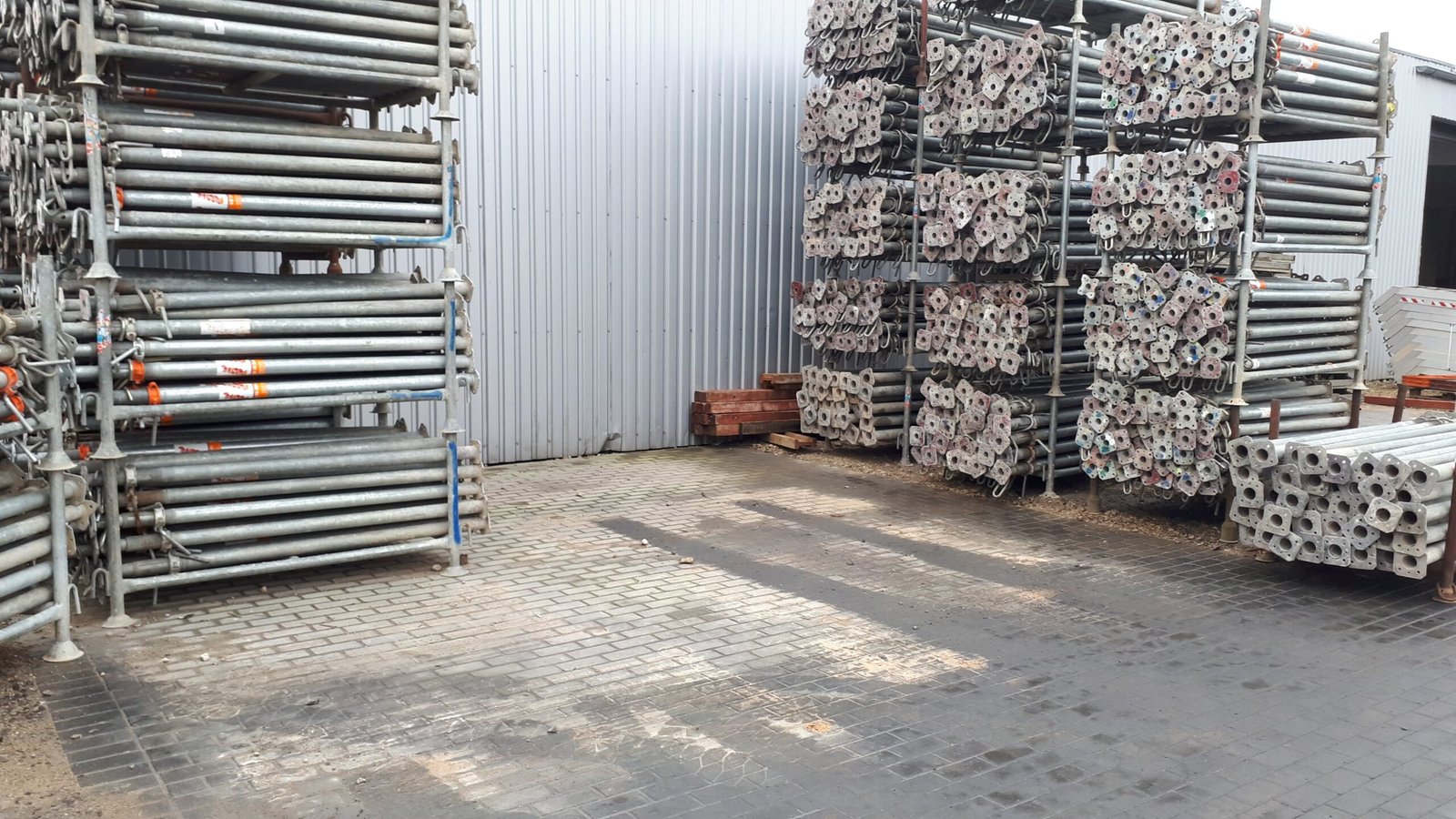
Damaged formwork props stored in a rental yard
Damaged formwork props waiting for inspection and refurbishment in a rental yard.

The most common result is not necessarily a broken prop. More often, the tube becomes locally dented or deformed. The inner tube may then become stuck inside the outer tube and stop moving freely.

For a rental company or contractor, this creates an operational problem: the asset may still be physically present in the fleet, but it can no longer be rented or used as intended. Sometimes the problem is not that the prop has reached the end of its life. The problem is that its geometry has been damaged.

The three most common formwork prop problems

Not all damaged props should be treated in the same way. The first step is to identify what kind of damage you are dealing with.

1. Dented prop tubes

A local dent in the outer or inner tube is one of the most common problems in formwork rental yards. The tube may remain otherwise intact, but the dent changes its round geometry.

As a result:

  • the inner tube may stop sliding;
  • adjustment may become difficult;
  • the tubes may become completely stuck;
  • the prop becomes unusable in normal operation.
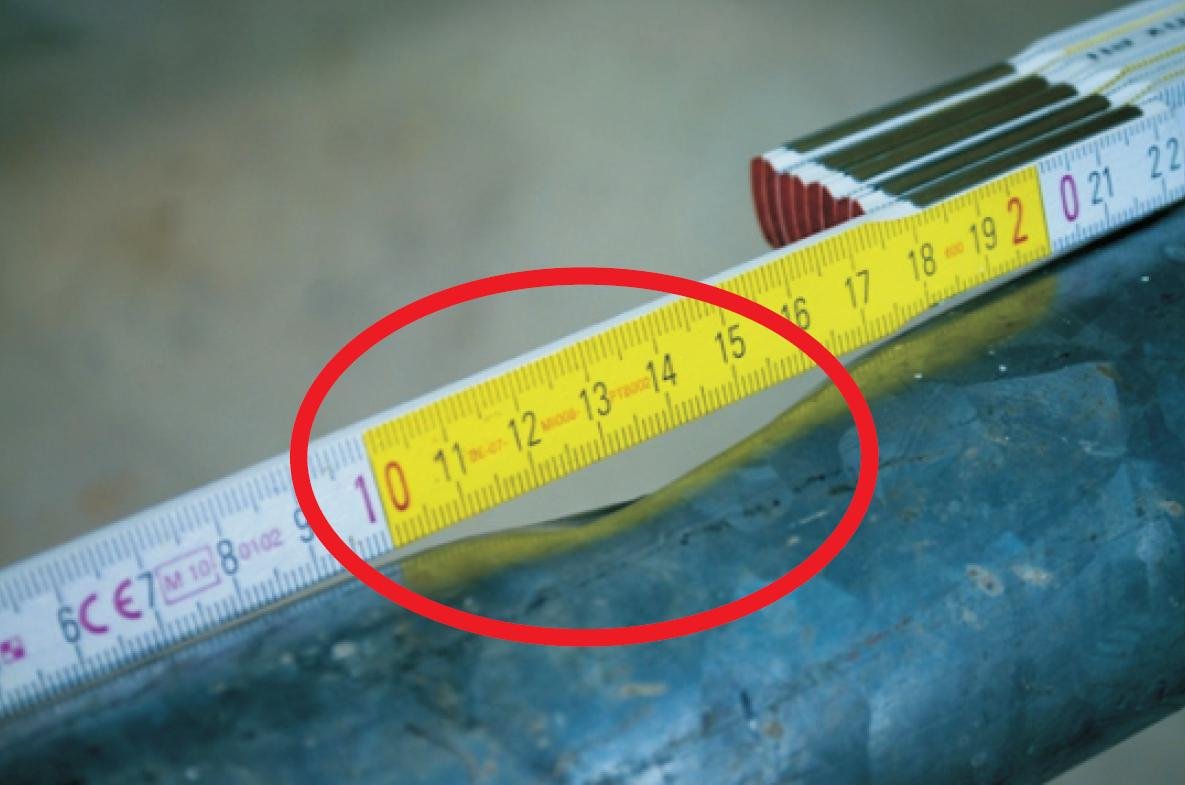
Dent in a damaged formwork prop tube
A localized dent changes the tube geometry and can stop the telescopic parts from moving.

This type of damage requires a localized tube repair. The goal is to restore the geometry of the tube at the damaged point rather than replacing the whole prop.

The PropFIX Tool Kit is designed specifically for this type of repair. The mechanical tool is inserted through the opening in the prop footplate and positioned inside the tube at the damaged location. Mechanical expansion is then used to raise the dent from inside the tube.

The standard PropFIX Tool Kit is designed for props with a minimum entrance opening of approximately 40 mm and handles outer tube diameters up to approximately Ø76 mm in its standard configuration. For larger props, additional layers extend the working range: the 80 mm extra-size layer covers wider tubes, while the 84 mm extra-size layer supports inner tubes up to Ø84 mm and outer tubes up to Ø88 mm. Custom-made extra-size layers can be produced for diameters up to approximately Ø110 mm.

The standard configuration reaches damage approximately 1.85 m from the footplate. By adding one or more Additional Extension Parts, props of any length can be repaired, provided the correct configuration and safe working setup are used.

2. Stuck inner and outer tubes

Sometimes the most obvious problem is not the dent itself. The inner tube is simply stuck inside the outer tube and cannot be removed.

A common improvised method is to hit the prop or footplate with a hammer or sledgehammer until the tubes separate. The problem is that the force is applied to components that were not designed to be repeatedly hammered. This may deform the footplate or damage the surrounding area.

A dedicated extractor is a more controlled approach. The PropFIX Extractor is designed to separate stuck inner and outer prop tubes before the dent repair process begins.

Once the tubes are separated, the damaged area can be inspected and, if suitable, repaired. This creates a clear refurbishment sequence: separate → inspect → repair → inspect again → return suitable equipment to the fleet.

3. Bent or “banana” props

A local dent and a completely bent prop are two different problems. If the entire prop has curved along its length, repairing one local section will not solve the problem. This type of deformation requires a straightening process.

The PropFIX Banana Unbender was developed for props that are bent along their length rather than only locally dented. A dent repair tool should not be described as a solution for every type of prop damage. The correct repair method depends on the actual geometry of the damaged prop. See the complete PropFIX product range.

Can damaged formwork props be repaired?

Often, yes. But the better question is: what exactly is damaged?

A prop with a localized dent is different from a prop with:

  • cracked steel;
  • damaged welds;
  • heavily corroded tubes;
  • damaged threads;
  • severe structural deformation;
  • missing components.

PropFIX is intended to restore tube geometry in cases where the relevant problem is a dent, deformation, stuck tube or whole-length bend that can be mechanically corrected. It is not a structural certification system.

After repair, the prop should still be assessed according to the manufacturer’s requirements, the company’s own inspection procedures and applicable workplace safety requirements before it is returned to service. Repairing geometry and confirming structural suitability are not the same task.

How does PropFIX repair a dented formwork prop?

The principle is simple. The tool is inserted into the prop tube from the bottom through the footplate opening. It is then moved to the damaged section. From inside the tube, mechanical force is applied outward against the dent.

The aim is to restore the tube’s shape in a controlled way from the inside rather than hammering the outside surface.

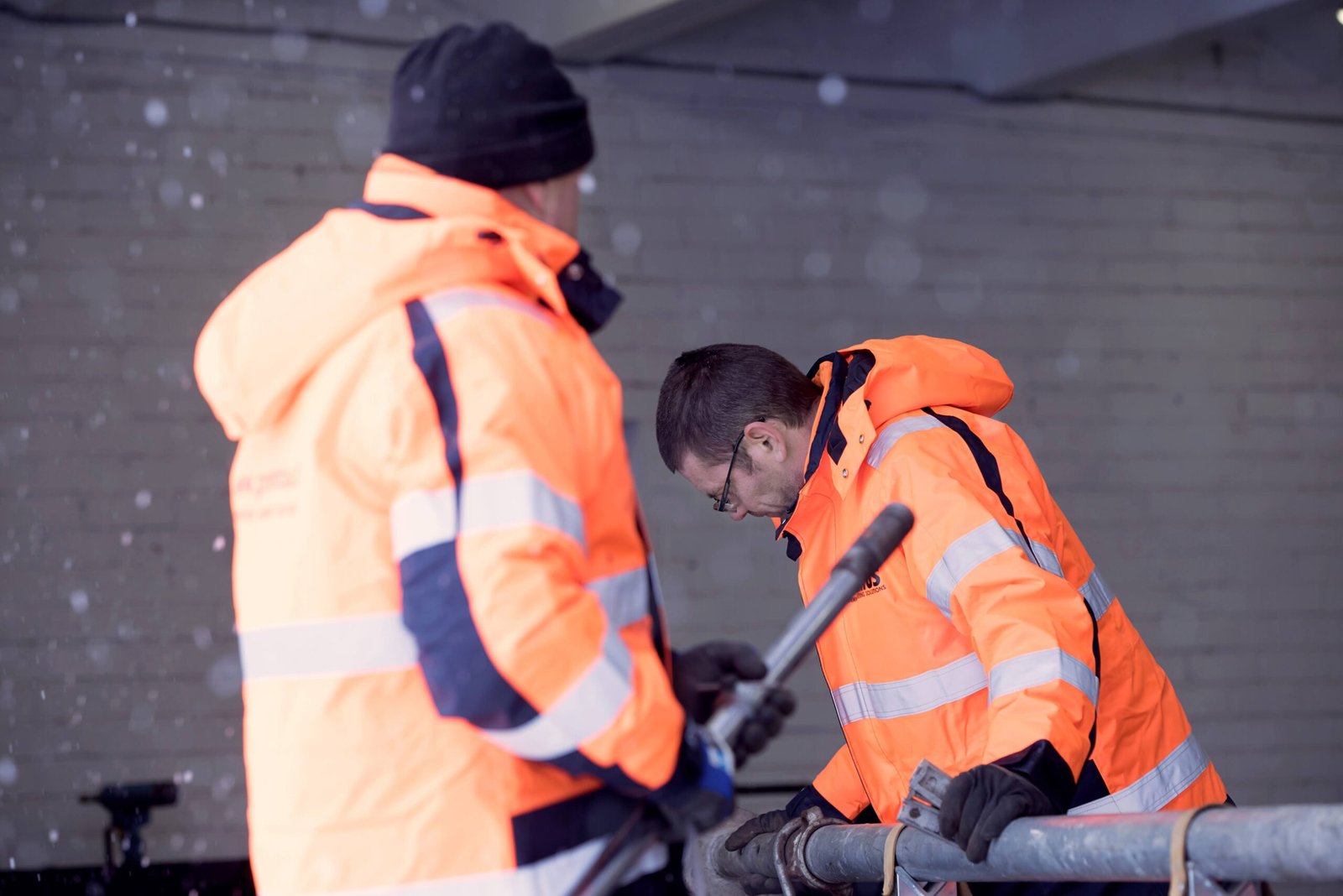
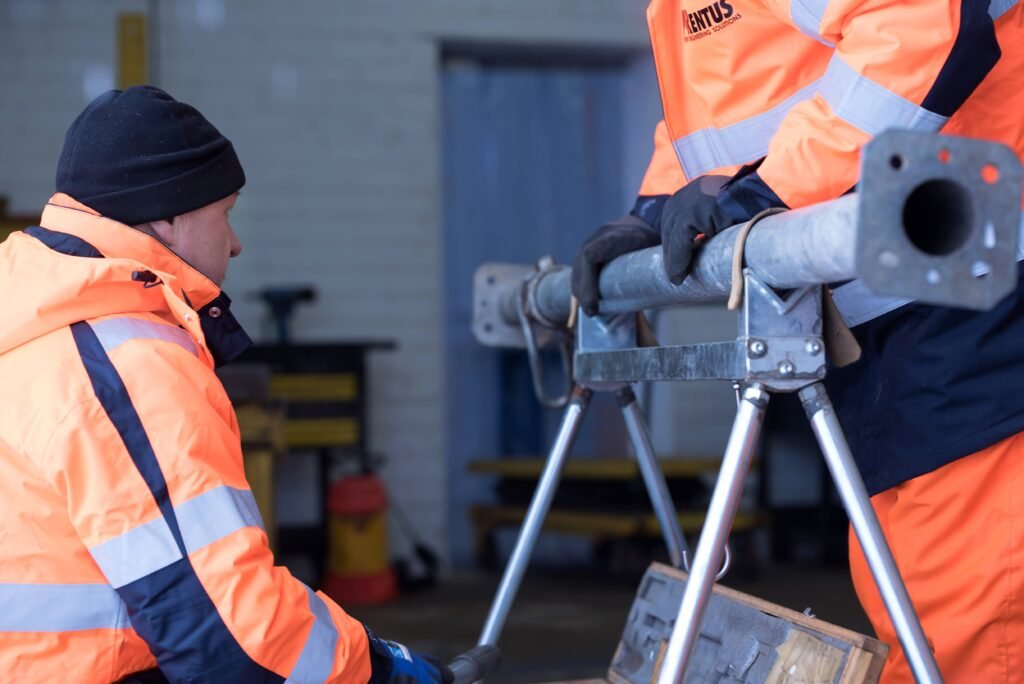
Workers carrying out formwork prop refurbishment
Formwork prop refurbishment using a controlled mechanical repair process.

The standard PropFIX system is mechanical and manual. It does not require:

  • electricity;
  • gas;
  • a hydraulic power pack.

The system is portable and can therefore be used in a yard, workshop or other suitable maintenance area without installing additional powered infrastructure.

Why repair from the inside?

A formwork prop is essentially a telescopic system. Its inner and outer tubes need to move relative to one another. Even a comparatively small dent can interfere with that movement.

Repairing from inside the tube allows force to be applied directly to the deformed area. This is different from external hammering, where the operator may be trying to correct the shape indirectly. It also allows the repair to focus on restoring geometry while avoiding unnecessary external impact on the tube surface.

For rental companies in particular, the objective is not simply to make one damaged prop usable again. The objective is to create a repeatable refurbishment process.

How long does formwork prop repair take?

There is no honest universal answer because the repair time depends on the prop and on how the yard is organized.

A typical repair process with PropFIX may take approximately 2–7 minutes, but this should be understood as a working range rather than a guaranteed cycle time.

The actual time depends on factors such as:

  • the severity of the dent;
  • prop diameter;
  • whether an additional layer is required;
  • whether an extension is required;
  • whether the inner tube first needs to be extracted;
  • how props are sorted before repair;
  • how many different prop types are being processed in the same batch.

If a yard has a large quantity of identical props already sorted by diameter and damage type, the process can be very fast because the same tool configuration can be used repeatedly. If every prop is different, preparation and tool adjustment naturally take longer. This is why yard organization matters almost as much as the repair tool itself.

How many formwork props can be repaired per day?

Daily productivity varies significantly. A company processing one standardized prop type in batches can repair considerably more units than a yard working with mixed diameters, different damage types and unsorted inventory.

Factors affecting throughput include:

  • whether the props are pre-sorted;
  • whether the same diameter is processed continuously;
  • whether tubes are already separated;
  • how severe the damage is;
  • whether accessories need to be changed between repairs;
  • how the workstation and material flow are organized.

For high-volume rental yards, the best results generally come from treating prop repair as a process, not as an occasional maintenance task:

  1. damaged props are collected separately;
  2. props are sorted by type and diameter;
  3. stuck tubes are separated;
  4. dents are repaired in batches;
  5. bent props are processed separately;
  6. repaired equipment is inspected before being returned to inventory.

This reduces unnecessary setup time and makes the repair station more productive.

Can PropFIX repair different prop diameters?

Yes, within the configuration limits of the selected tool.

The standard PropFIX Tool Kit is designed for a minimum entrance hole of approximately 40 mm and supports outer tube diameters up to approximately Ø76 mm in the standard setup.

Props are not limited by their total length. The standard tool reaches approximately 1.85 m from the footplate, and one or more Additional Extension Parts can be used to reach damage further inside props of any length.

There is also a smaller PropFIX ECO configuration for props with a smaller entrance opening. The current product specification gives a 35 mm entrance opening and up to approximately Ø60 mm outer tube diameter; it can also be configured for square tubes.

Before selecting a tool configuration, three measurements are especially important:

  • footplate entrance hole diameter;
  • tube diameter;
  • distance from the footplate to the furthest damaged area.

These measurements determine whether the standard configuration is sufficient or whether additional layers or extensions are needed.

Can square formwork props be repaired?

Some PropFIX configurations can also be adapted for square tubes. This should be assessed separately because square and round tubes require different contact geometry.

PropFIX ECO can be used with square-shaped tubes when the appropriate additional layers are used. If you work with non-standard profiles, the safest approach is to send the prop dimensions and photographs before ordering.

Do you need hydraulics to repair formwork props?

No. PropFIX is a mechanical system.

This matters because some companies assume that a prop straightening or repair process necessarily requires hydraulic cylinders, pumps, electrical power or a fixed workshop installation.

A manual mechanical system offers a different operating model. It can be moved between work areas, does not depend on an external power supply and can be used as a dedicated prop refurbishment station. This can be particularly useful for rental yards that want to maintain repair capability in-house without investing in a larger hydraulic setup.

Repairing props versus replacing them

The financial logic is simple. If a prop is genuinely beyond repair, it should be replaced. But if the main reason it cannot be used is a repairable geometric deformation, immediate replacement may be an unnecessary cost.

The relevant calculation is not simply “What does a repair tool cost?” It is: how much replacement cost can we avoid over the working life of the repair system?

Based on long-term feedback from returning PropFIX customers, the internal wear component typically requires replacement only after roughly 20,000 prop repairs on average. This is not a guaranteed lifetime for every operating environment, but it provides useful context for the economics of repeated refurbishment.

Using the current €4,350 price of the standard PropFIX Tool Kit as a simple example:

€4,350 ÷ 20,000 repairs = approximately €0.22 of tool acquisition cost per repaired prop, excluding labor, accessories and other operating costs.

The real saving depends on the replacement value of the prop, labor cost, the number of damaged props, how frequently equipment is returned damaged and the percentage of props that are suitable for refurbishment.

That is why payback should be calculated for each company rather than promised as a universal number. Calculate your own PropFIX payback.

Why formwork rental companies have a different repair problem

For a construction company, a damaged prop is a maintenance cost. For a formwork rental company, it is also an asset utilization problem.

A damaged prop sitting in the yard:

  • occupies inventory;
  • cannot be rented;
  • does not generate revenue;
  • may eventually be replaced even though the original investment has not yet delivered its full useful life.

A few damaged props are a maintenance issue. Hundreds or thousands of damaged props across multiple rental cycles become an asset management issue. That is why high-volume rental companies benefit from having an organized refurbishment process rather than dealing with damaged props individually.

What information is needed before choosing a prop repair system?

Before selecting the right PropFIX configuration, collect a few basic measurements.

  1. Footplate entrance hole diameter. The tool must physically enter the prop.
  2. Outer and inner tube diameters. These determine which tool and layers are required.
  3. Maximum distance to the damaged area. This determines whether the standard extension is sufficient.
  4. Typical damage type. Is the main problem a dent, a stuck tube or a whole-length bend?
  5. Approximate quantity of damaged props. This helps determine whether an occasional repair setup or a dedicated refurbishment workstation makes more sense.

Photographs of typical damaged props are also useful. In many cases, these measurements are enough to recommend the correct configuration.

What tools are used in a complete prop refurbishment setup?

PropFIX Tool Kit

Used for local dents and tube deformation. View PropFIX Tool Kit.

PropFIX Extractor

Used to separate stuck inner and outer tubes before repair. View PropFIX Extractor.

Working Bench

Provides a dedicated workstation for the prop repair process. View the PropFIX Working Bench.

Banana Unbender

Used for props that are bent along their full length rather than locally dented. View the PropFIX Banana Unbender.

Additional layers and extensions

Use the 80 mm layer, the 84/88 mm configuration or a custom layer for diameters up to approximately Ø110 mm. Additional Extension Parts provide the reach required for props of any length.

This modular approach is important because most professional yards do not operate with only one prop size.

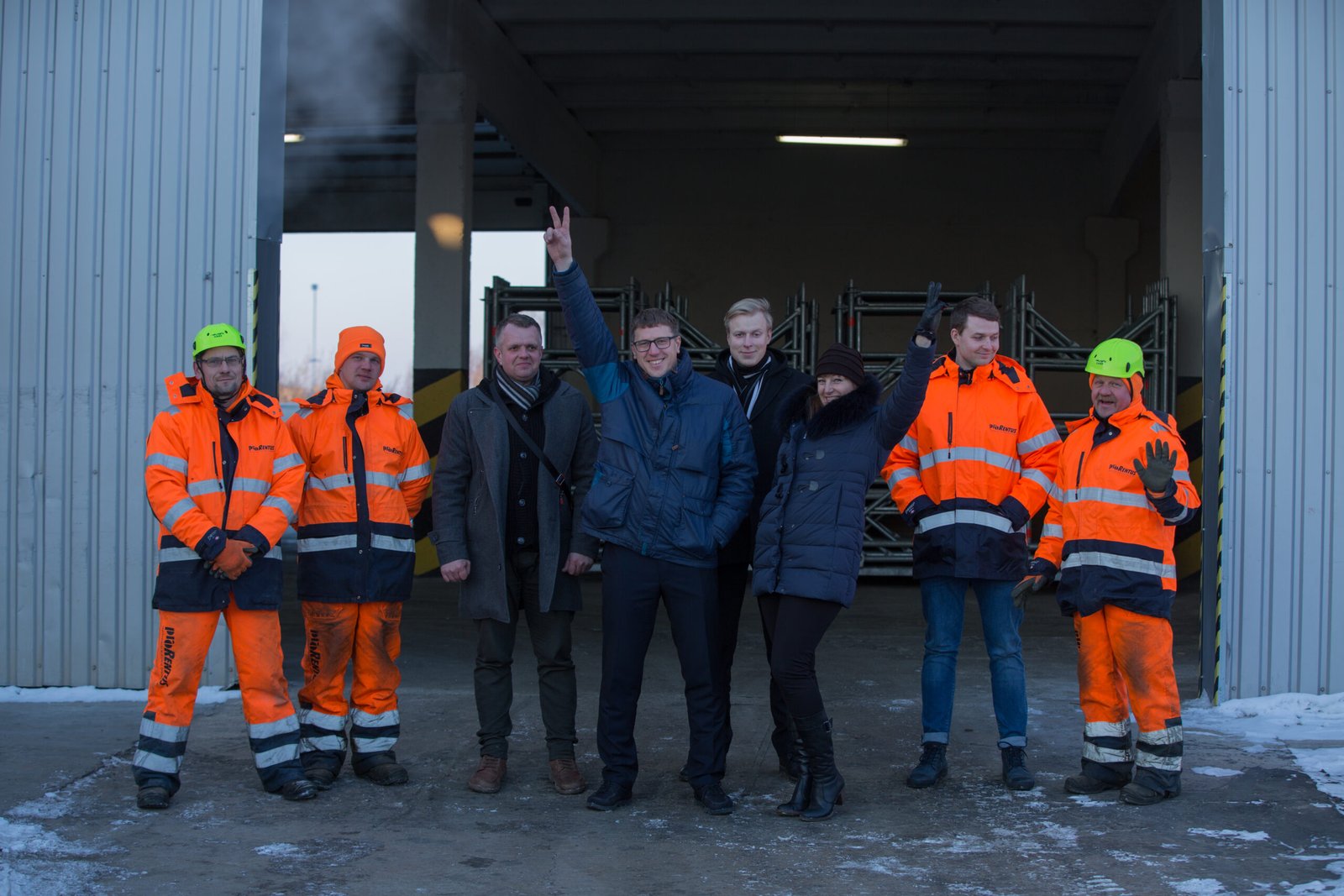
Formwork rental yard team after PropFIX training
A formwork rental yard team after PropFIX training.

Is formwork prop refurbishment environmentally better than replacement?

Generally, extending the useful life of repairable equipment reduces the need to replace it prematurely. Steel props require material, manufacturing, transport and logistics.

If a prop can continue to perform its intended function after suitable repair and inspection, extending its service life can reduce unnecessary material turnover. However, sustainability should not be used as a reason to keep equipment in service when it no longer meets the required condition. The priority remains correct technical assessment.

When should a prop not be repaired?

Not every damaged prop belongs in a repair process. A prop should be assessed separately if it has:

  • cracks;
  • serious weld damage;
  • severe corrosion;
  • heavily damaged threads;
  • missing or damaged structural components;
  • deformation beyond the scope of the repair system;
  • any condition that makes its structural suitability uncertain.

A dent repair tool should never be treated as a substitute for inspection. The purpose of PropFIX is to repair specific geometric problems, not to certify a prop.

Formwork prop repair is a process, not just a tool

This is the most important point. Buying a tool alone does not create an efficient refurbishment operation. The best results come when repair is treated as part of fleet management.

Identify damage → sort props → separate stuck tubes → repair geometry → straighten bent props where appropriate → inspect → return suitable props to inventory.

Once this becomes a repeatable process, damaged props stop being treated automatically as scrap. They become assets that can first be evaluated for recovery.

For companies with significant formwork and shoring fleets, that difference can have a direct impact on replacement expenditure and equipment utilization.

Frequently asked questions about formwork prop repair

Can a dented formwork prop be repaired?

Yes, many local tube dents can be mechanically repaired if the damage is suitable for refurbishment. The damaged area should still be inspected before and after repair.

How do you fix a dent in a formwork prop?

A specialized internal repair tool can be inserted into the tube and positioned behind the dent. Mechanical expansion is then used to restore the local tube geometry.

How do you separate stuck prop tubes?

A dedicated extractor can be used to pull the inner tube out of the outer tube before repairing the deformation that caused it to become stuck.

Can a bent prop be straightened?

Some whole-length bends can be corrected using a dedicated straightening system such as the PropFIX Banana Unbender. A whole bent prop requires a different process from repairing a local dent.

How long does prop repair take?

A typical PropFIX repair may take around 2–7 minutes, depending on the damage, dimensions, tool configuration and preparation required.

Does PropFIX require electricity?

No. PropFIX is mechanically operated and does not require electricity, gas or a hydraulic power unit.

What diameter props can PropFIX repair?

The standard PropFIX Tool Kit supports outer tube diameters up to approximately Ø76 mm. The 84 mm extra-size layer supports inner tubes up to Ø84 mm and outer tubes up to Ø88 mm. Custom-made layers can extend the working range to approximately Ø110 mm. PropFIX ECO is designed for smaller entrance openings and tubes up to approximately Ø60 mm.

How far inside the prop can the tool reach?

The standard PropFIX configuration reaches approximately 1.85 m from the footplate. One or more Additional Extension Parts can be added, allowing damage to be reached in props of any length.

Is a repaired prop automatically safe to use?

Yes — provided that the prop is suitable for repair and the repair is performed correctly. The PropFIX repair process restores the tube without compromising the prop’s load-bearing capacity or safety. As with any repaired load-bearing equipment, the prop should be inspected after repair and returned to service only if it meets the manufacturer’s and applicable safety requirements.

Is repairing props cheaper than replacing them?

Yes. When a prop is suitable for repair, repairing it with PropFIX is significantly more economical than replacing it. One tool can repair thousands of props, making the tool cost per repair very low compared with purchasing a new prop. The exact savings depend on your fleet and repair volume. Calculate your individual PropFIX payback.

Do you have damaged props in your yard?

If your formwork or shoring props are being removed from service because of dents, stuck tubes or bends, the first step is to determine whether they are suitable for refurbishment.

Send us:

  • photos of the damaged props;
  • footplate entrance hole diameter;
  • inner and outer tube diameters;
  • distance to the furthest damaged area;
  • approximate number of props you expect to repair.

We can recommend the appropriate PropFIX configuration for your fleet.

Request a PropFIX quotation

PROPFIX BAUMA 2022

Let’s meet at Bauma 2022 B3/332

PropFIX at Bauma2022 exhibition in Munich will bring and demonstrate the most universal tools for formwork prop fixing.

This year #Bauma ‘s one of the topics is zero emission. Therefore, we are glad that our clients can use the tools to fix the formwork props and they require zero additional resources:

  • you do not need electricity,
  • you do not need gas,
  • and it does not create additional pollution.

Furthermore the whole process of formwork repair is faster and more sustainable, because you can renovate the props at your warehouse or even construction site without transporting them to other specialized repair companies and transport them back.
In other words, you save time and money!

We invented and produced the first PropFIX tool in 2009. Since that time patented tools are shipped to many formwork rental, specialized formwork repair and construction companies. The tools proved their efficiency and companies come back for new tools. The tools help to save money by repairing fast and cheap. Also the tool saves money because the material gets back to rental immediately after repair which can be done at your warehouse. Moreover some companies also bring the tool to the construction site.

As long the the problem of the damaged material is solved companies do not need to charge the clients big damage fees.

We are preparing the special BAUMA sales deals for you as always.
This will be our third PropFIX at Bauma2022 exhibition in Munich.

Let’s meet and talk at Bauma2022 again! Our booth will be at the hall B3/332

PropFIX tools formwork repair Andra Bauma

#zeroemission
#PropFIX
#formworkrepair

PropFIX Accomplishments

We have become a member of “Panevezys Chambers of Commerce, Industry and Crafts”

This organization was founded in 1991.

“Panevezys Chambers of Commerce, Industry and Crafts” helps us with providing the “certificate for the country of origin” which is sometimes needed for PropFIX tools custom clearance procedures.

The main advantages for business which this institution can provide are:

– The help in finding new export markets.
– The newest information in business possibilities, law restrictions and contacts.
– A big data base of various information can help answering difficult questions.
– A possibility to organize the meetings with various contacts from many institutions and companies.
– Many trainings are organized.
– Country of origin certificates are issued by this organization.
– And many other advantages.

Panevėžys chambers

PropFIX at RESTA construction exhibition